

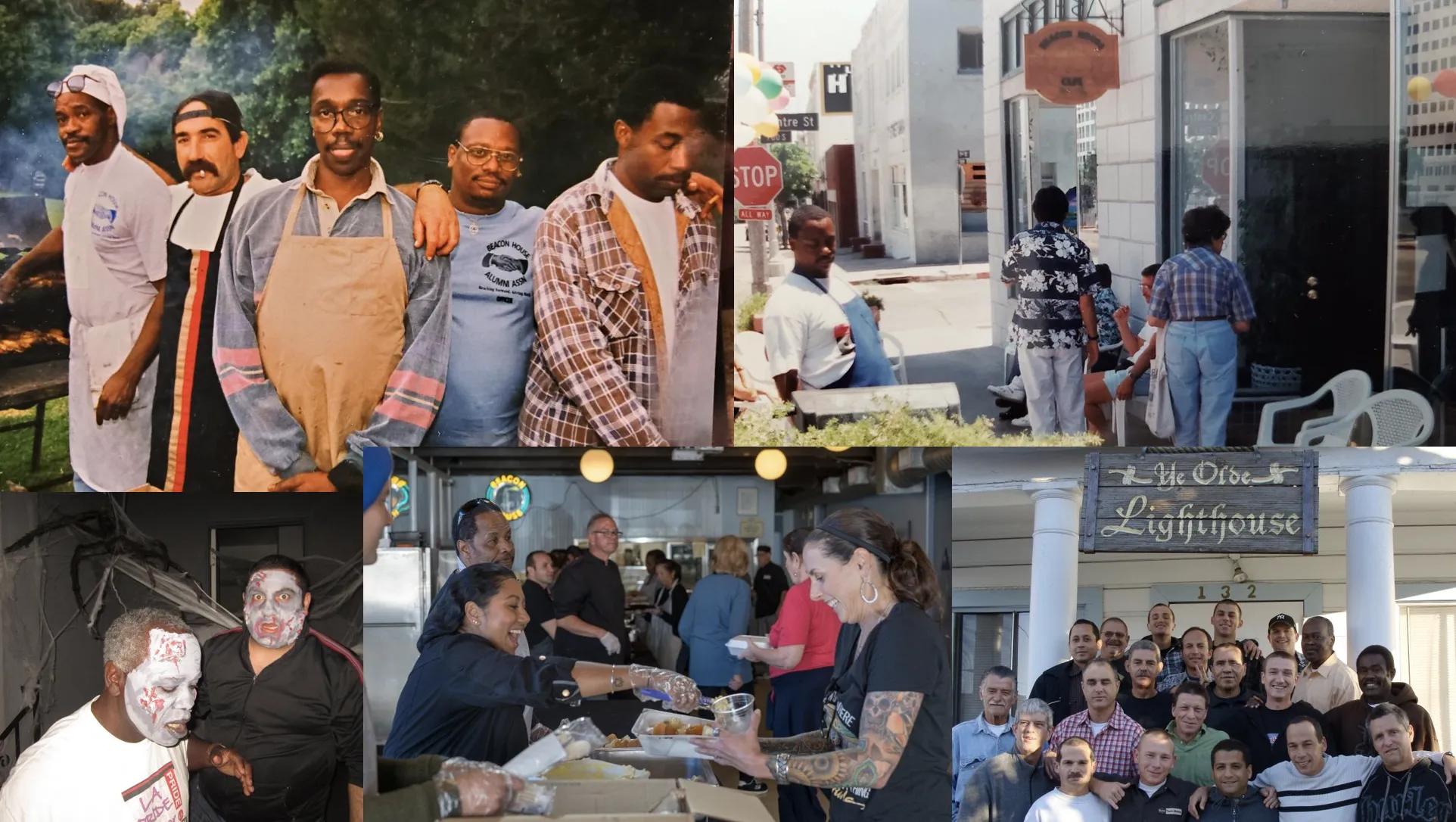
Over the years, Beacon House has undergone a number of changes. It has grown from no full-time staff in 1970 to over 45 employees today. It began with just a simple two-story house at 1003 South Beacon Street with 18 residents to an entire campus of 6 residential buildings providing over 100 beds to men seeking recovery. The Beacon House has witnessed the sweeping changes in the stigma surrounding alcoholism and addiction, political and legal changes, the "war on drugs", the advent of the internet, a pandemic and a fentanyl crisis. Despite all these changes, the one thing that remains constant from 1970 to today is the organization’s uncompromising commitment to its mission: to help men recover from alcoholism and drug addiction and return to lives of purpose.
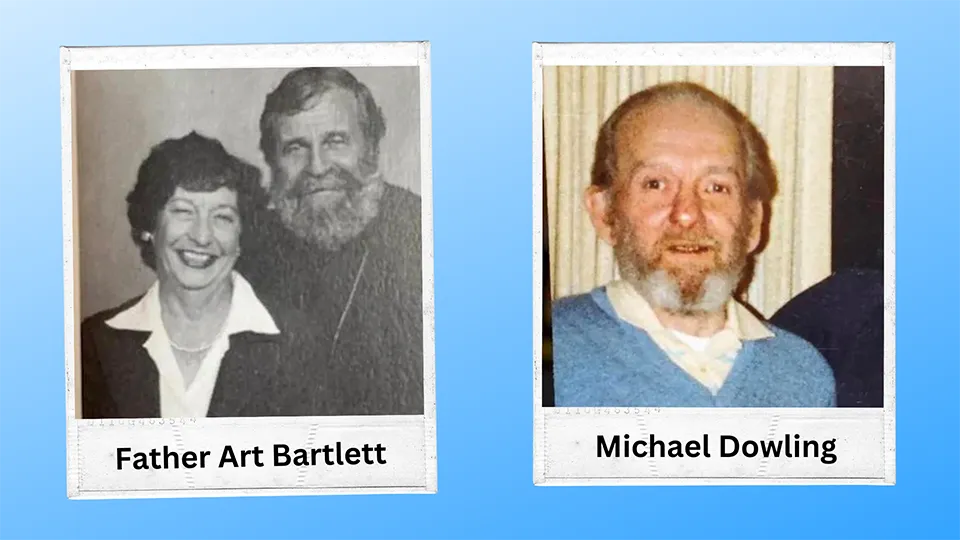
In 1970, Father Art Bartlett, director of the Episcopal Seaman’s Center and a clergyman of St. Peter’s Episcopal Church, recognized a need in the community. His work in the church led him to interact with many seamen with alcohol and drug abuse problems. Father Bartlett had befriended one of these seamen, Michael Dowling, who was now sober and also attempting to help other alcoholics achieve sobriety. On one fateful Sunday, as they were looking out over the Port of Los Angeles and envisioned a “Beacon House”, a men’s home that could be a safe harbor to many a floundering alcoholic. Shortly thereafter, Beacon House was born.
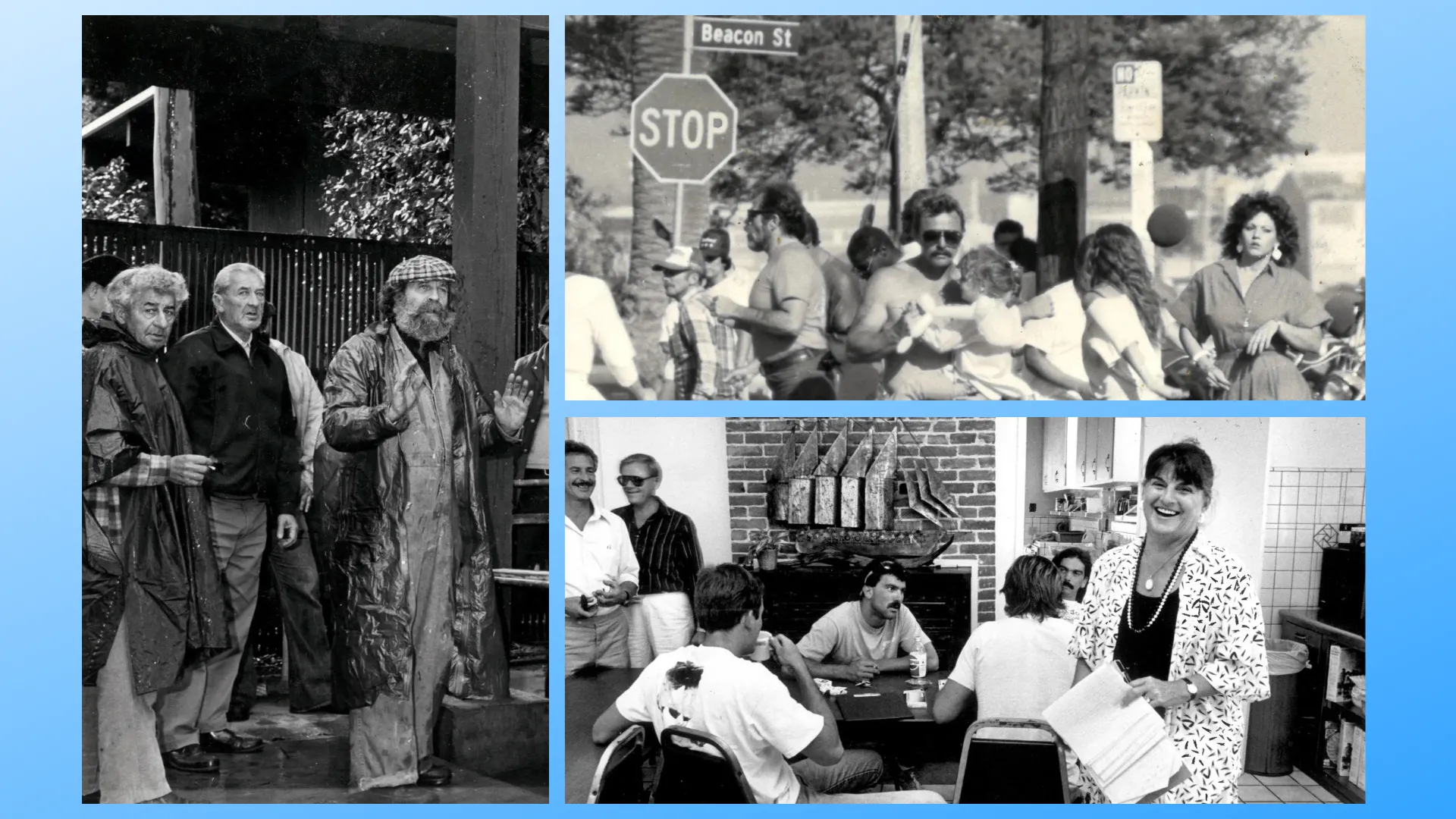
From 1970-1973, the house was essentially running by itself without any formal leadership, staff, or structure. On December 3, 1973, a group of leaders in the local recovery community came together to form what would be the first "Board of Directors" and executed the Articles of Incorporation and for the first time identified in writing a Beacon House mission statement "To assist men who seek recovery from the disease of alcoholism and/or addiction to other habit-forming chemicals. The Association will attempt to provide food and shelter for these men and to help them by counsel and the use of the Alcoholics Anonymous program, to rehabilitate themselves, to the end that they may once again return to normal useful lives." In the early years, Beacon House operated without any permanent staff members, essentially as a safe place to live and eat while they pursued sobriety through the program of Alcoholics Anonymous. In June 1974, the house was officially incorporated as a 501(c)(3) non-profit, but continued to run unsupervised save for the occasional visit from Michael Dowling when not at sea and Fr. Art Bartlett when not working at the Seamen Center.
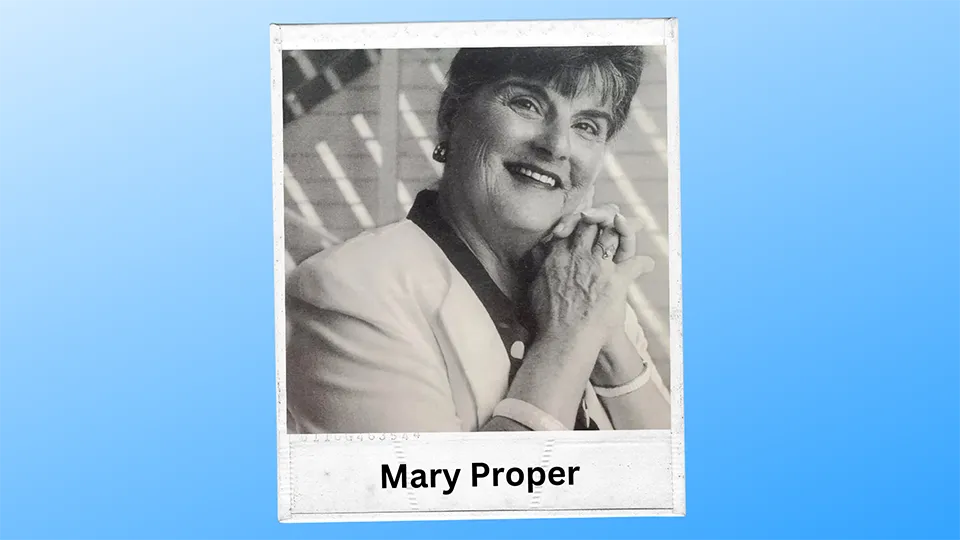
In 1985, looking to implement a formal structure, the Board of Directors hired its first paid employee and first Executive Director, Mary Proper. Mary's only help was one or two of the senior residents at the time. Mary understood that if the men were to have lasting change in their lives, structure was needed. In collaboration with Michael Dowling, Mary and Michael laid out what would be the first program elements and curriculum that the men needed to follow in order to be allowed to stay. Aside from a few minor changes over the years, this is the same program that our men follow today. There would be a minimum number of 12-step meetings to attend every week, there would be a morning group for accountability (Monday-Friday), the men would have to be honest, they would have to give back to the community around them through acts of community service, and they would have to have fun. "Mando fun" as it was affectionately called later, came in many forms, but Mary thought this aspect of intentional community through having fun was a vital part of long-term, contented sobriety.
The implementation of a formal program structure and the hiring of an Executive Director meant sustainability for Beacon House moving forward. The 1990s proved to be a period of rapid expansion with the acquisition of adjacent dilapidated buildings to provide room to help more men. From 1986-1998, the Beacon House purchased four residential facilities and a meeting hall, and leased two additional residential facilities, increasing the total capacity by over 100 beds.
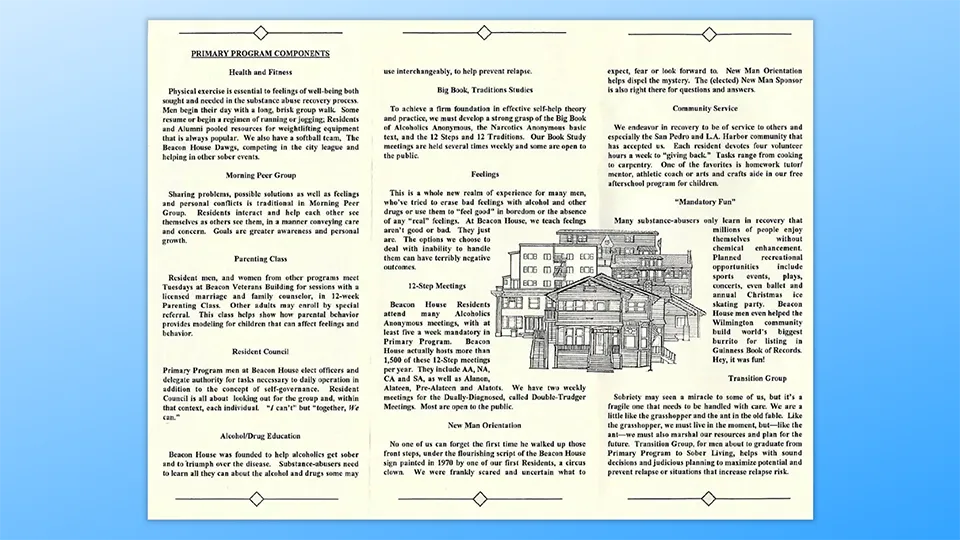
Much of the 2000s were spent refining the social model culture of the program. The Beacon House deepened its relationship with the local community through the men’s community service efforts. They swept the streets and alleys of San Pedro, fed the homeless, performed litter removal and landscaping, worked sanitation at local San Pedro events and festivals, worked security at holiday parades and provided volunteers wherever the community needed help of any kind. Many came to know Beacon House through our community events like the annual Block Parties, Haunted Houses, picnics, our Christmas Tree Lot, and Christmas Day Toy Drive for local children. Love and service spread outward from the Beacon House throughout the surrounding cities and has remained the link between Beacon House and the community.
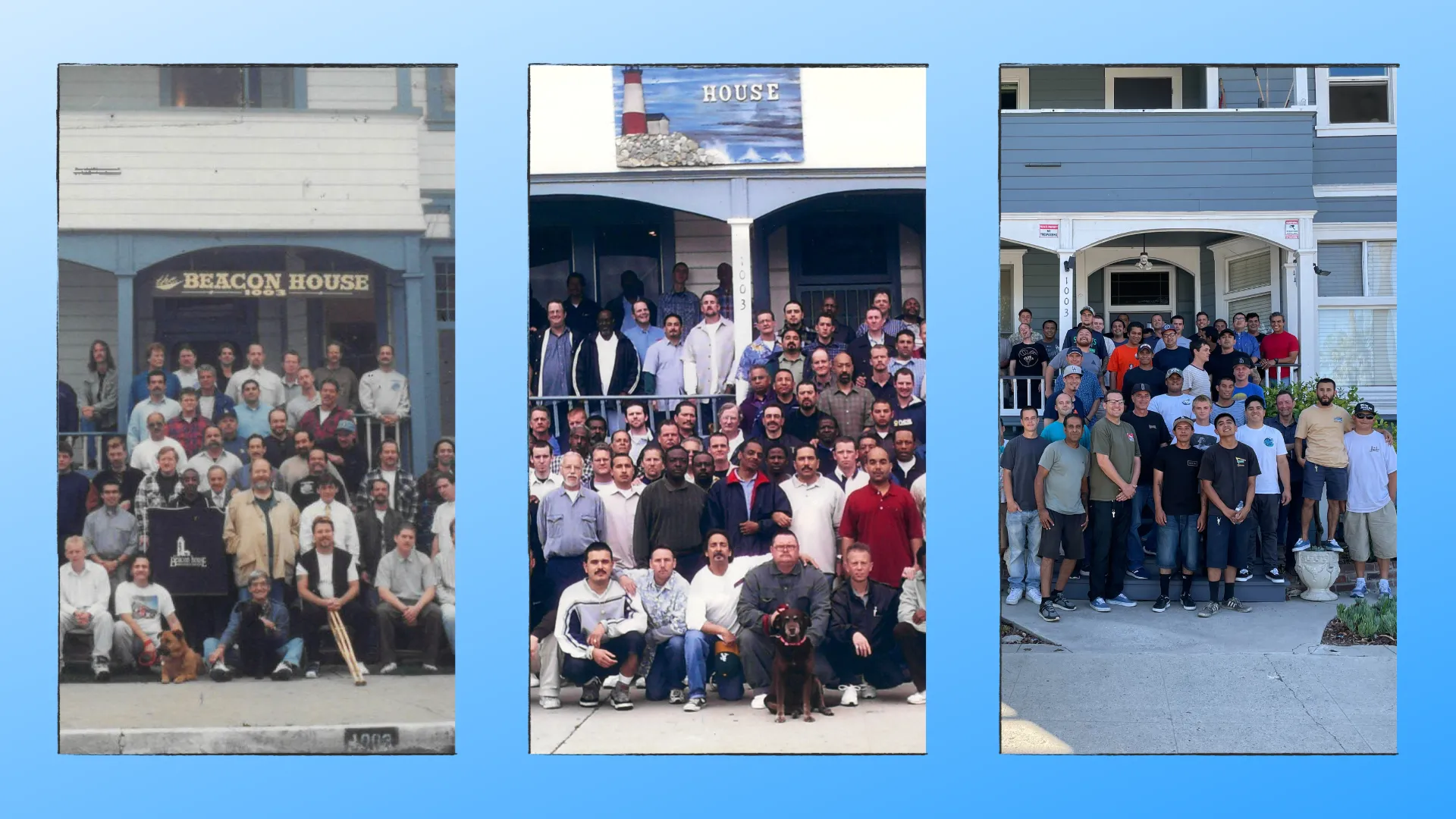
The past several years have been characterized by Beacon House adapting to the changing legal and regulatory environment of substance abuse treatment as the opioid epidemic and fentanyl crisis started to take hold of our communities. Additionally, innovation and entrepreneurship led the Beacon House to adding a stronger Workforce Development program comprising two key pillars: Beacon House Thrift Stores and Beacon House’s Culinary Program. Through these social enterprises, men now learn marketable job skills while further developing their recovery program, better preparing them to reintegrate into society. The Beacon House was also affected by the global COVID-19 pandemic as many organizations were. they once again had to quickly adapt to new business practices within its residential treatment facilities, thrift stores and catering programs to maintain health and safety standards for its residents, staff and community members. The scale and footprint of Beacon House’s operations have grown significantly, and its program offerings have adapted to a changing world, but at its core the Beacon House continues to do one thing really, really well: help men recover.